Winter Care for Desi Chickens: What Actually Matters on an Indian Farm
December mornings in Bhopal have a particular feel. The air is sharp, the grass is damp, and the first thing most of us do is check the birds, not ourselves.
It’s a fair instinct. Desi chickens are tougher than commercial hybrids, but “tough” isn’t the same as “unaffected.” Winter care for desi chickens comes down to four things: dry litter, fresh air without cold draughts, plenty of feed and clean water. Get those right and most of the rest is detail.
This article walks through each one, and where the evidence comes from.
A Note on the Evidence
Most published winter poultry advice comes from US university extension services, written for freezing climates. Bhopal rarely sees those conditions, so we’ve kept the principles and dropped what doesn’t apply, like frozen water and frostbite. Check the IMD forecast during cold waves, since conditions vary from year to year.
How Do You Know Your Chickens Are Cold?
Watch their behaviour. University of Minnesota Extension lists huddling together, holding a foot up against the breast and puffed-up feathers as signs of cold stress. They also note that a chicken loses heat faster than it can produce it when the environment is too cold, and that prolonged cold stress can reduce performance and lead to death.
A puffed bird in mid-morning sun may just be resting. A puffed, huddled bird at dawn, whose flock mates are all doing the same, needs attention.
Dry Litter Is Your Best Winter Insulation
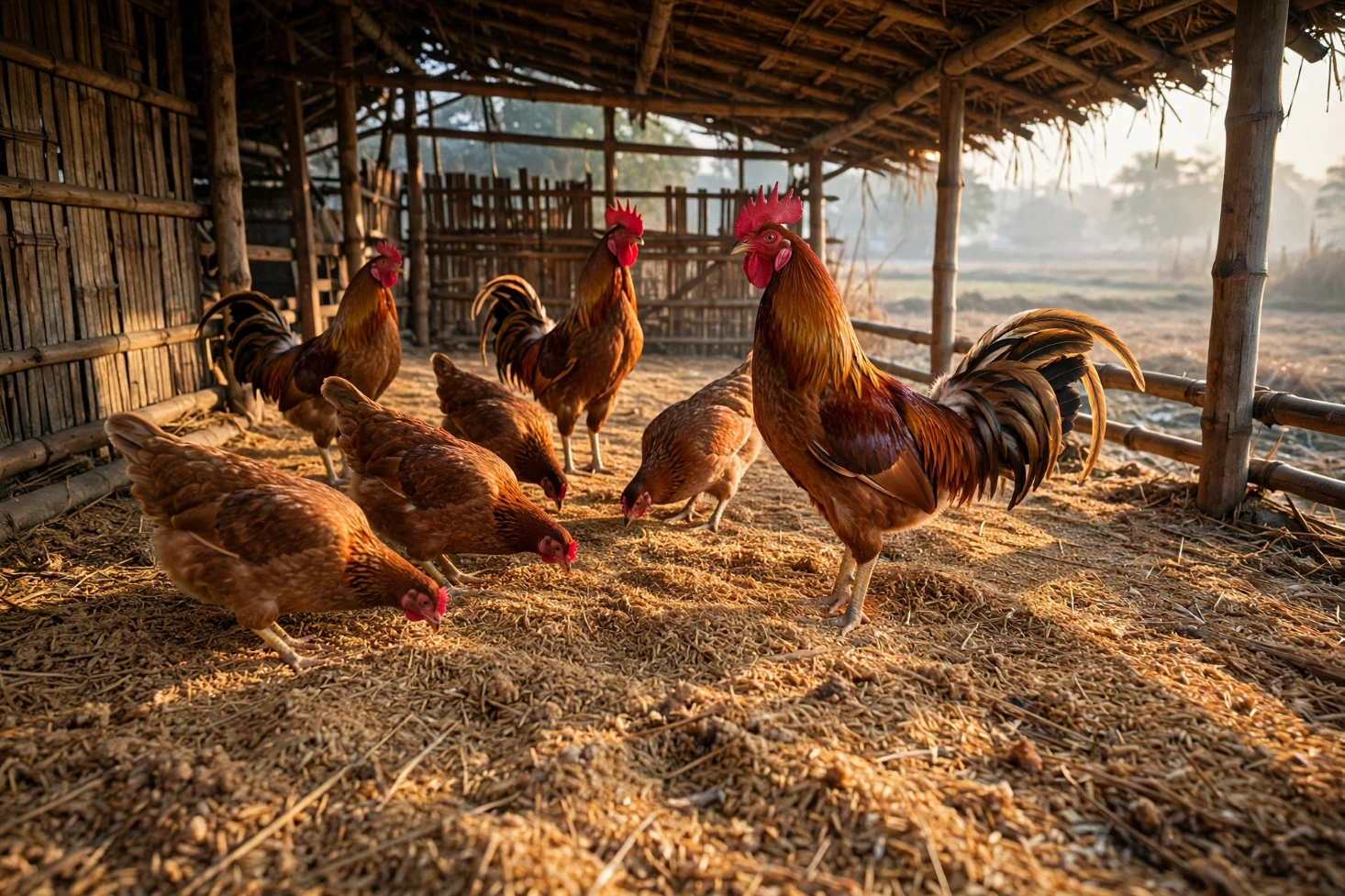
Illinois Extension recommends a deep layer of dry bedding, 6 to 12 inches, to insulate and keep feet warm. The key word is dry.
Wet litter gives off ammonia, and a damp shed in cold weather is where respiratory trouble starts. We cover that cycle in detail in our article on humidity in poultry farming. In winter, it gets worse, because damp air at low temperatures is slow to dry.
In practice:
- Turn the litter regularly and remove wet patches.
- Top up with fresh, dry material such as rice husk.
- Stop drinker spillage at the source, because it’s usually the main cause of wet litter.
Fresh Air Without the Cold Draught
Many farmers close every opening on a cold night. It feels kind. It’s also how ammonia builds up.
Extension sources are consistent on this. The University of Maine bulletin says laying hens need air exchange to stay healthy, either from fans or natural ventilation. An East Texas poultry checklist gives a useful test: if you smell ammonia, ventilation is missing. It also separates a draught, which is a continuous current of cold air that can chill birds, from proper ventilation, and suggests checking for draughts at high points, low points and every corner.
So the target is air that moves out through high openings, with no steady cold stream blowing across the birds at floor level. Cover gaps near the ground and keep the upper openings working.
Feed: Birds Eat More When It’s Cold
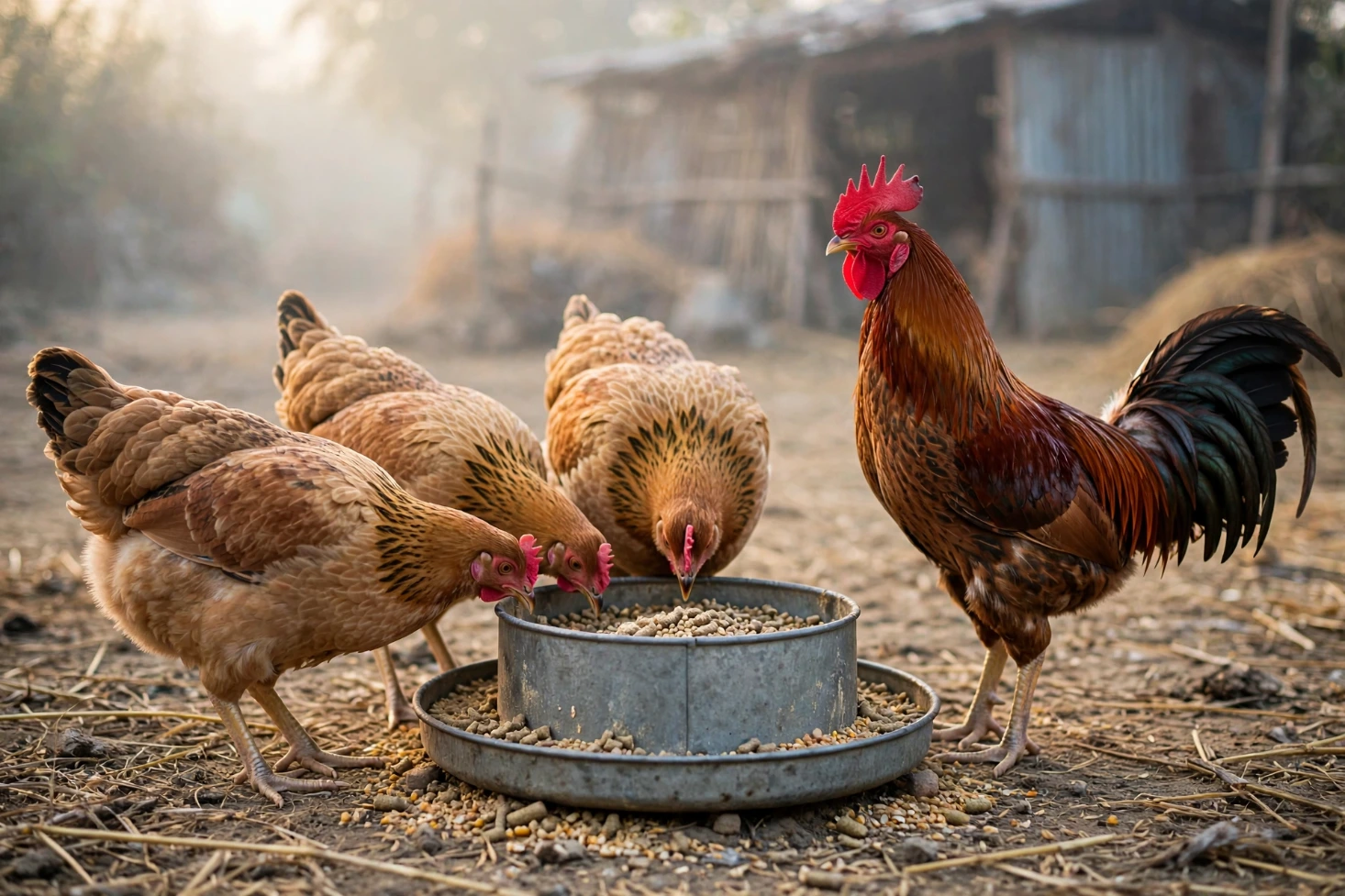
Cold weather costs energy. University of Minnesota Extension notes that flock feed intake may increase up to 25 percent in cold weather, and University of Arkansas extension poultry specialists say the same.
For desi and Sonali birds on a semi-free-range system, this matters. If you don’t raise the ration or keep feeders full, birds that were comfortable in October can lose condition by January. Keep feeders topped up, and watch consumption compared with other seasons, as the Maine bulletin advises.
A Little Grain in the Evening
Several extension sources suggest scattering scratch grain late in the day, which keeps birds busy and turns over the litter. Minnesota notes it can help chickens stay warm on cold nights. The University of Maryland advises limiting treats and scratch to 10% of total intake. A handful of grain per ten birds is the Maine guideline. Don’t let it replace the balanced ration.
Water: Cold Birds Still Need It
Water intake falls in winter, but it doesn’t stop mattering. Minnesota Extension says that without water, chickens will stop eating. Illinois Extension says chickens need water at least every 10 hours, day and night.
Bhopal doesn’t freeze, so the American problem of ice doesn’t apply. But a few things do:
- Give water that isn’t ice-cold, since birds drink less from cold water.
- Refresh it daily, and keep drinkers clean and set at the right height.
- Check after cold nights that nothing has spilt, because spilt water turns into wet litter.
Chicks and Young Birds Need Extra Attention
Adult desi chickens cope with Bhopal winters better than chicks do. That’s our reasoning, not a study result: young birds have less body mass and less feather cover.
If you’re brooding in winter, temperature control matters even more. Our article on chick brooding covers the details. Keep heat sources well away from litter, and don’t let a heater replace ventilation.
Heating Safely
Some farms use bulbs or heaters for brooding and cold spells. Used carelessly, they start fires.
University of Minnesota Extension advises keeping wires away from poultry, water and flammable litter, and using a cage around the bulb so it can’t touch bedding if it falls. Skip long extension cords. Unless birds clearly need extra heat, dry litter and a draught-free shed do most of the work.
Breed Matters, Too
Minnesota Extension notes that heavier and dual-purpose breeds handle cold better than smaller, lightly feathered ones, and that birds with large combs and wattles may need extra care. We don’t have breed-specific cold-tolerance data for Sonali, so we won’t claim any. Watch your own flock and trust what you see.
A Simple Winter Checklist
| Check | When | What you’re looking for |
|---|---|---|
| Bird behaviour | Dawn and evening | Huddling, puffed feathers, lifted feet |
| Litter | Daily | Dry and crumbly, not damp or caked |
| Ammonia smell | On entering the shed | Any sharp smell means more ventilation |
| Feeders | Morning and evening | Never empty |
| Drinkers | Daily | Clean, not spilt, birds drinking |
| Draughts | After dark | No steady cold stream at bird level |
FAQ: Winter Care for Desi Chickens
Do desi chickens need heating in winter?
Not always. Dry litter, a draught-free shed and enough feed do most of the work, and heat is mainly a concern for chicks and unusually cold nights. If you use heat, follow fire safety rules.
How do I know if my chickens are cold?
Look for huddling, puffed feathers and birds holding one foot up against the body, as the University of Minnesota Extension describes.
Should I feed more in winter?
Birds usually eat more when it’s cold, up to 25 percent more according to extension sources. Keep feeders full and watch consumption.
Should I close all the shed openings at night?
No. Birds still need fresh air to clear ammonia and moisture. Block draughts at bird level, but keep upper openings working.
Is a little grain in the evening a good idea?
It can help, but keep it to a small share of the ration, around 10% as the University of Maryland suggests, so it doesn’t replace balanced feed.